
I opened the fridge on a Sunday evening a while back and found the container of chicken and rice I’d meal-prepped for the week, barely touched, the edges gone slightly gray. Three hours of Sunday cooking, and by Wednesday I was ordering takeout anyway because the thought of eating the same thing a fourth day in a row made my stomach turn.
Why The American Meal Prep Method Never Worked For Me
The whole idea behind most meal prep advice is the same: cook one big meal on Sunday, portion it into containers, eat it all week. It’s efficient on paper. It also assumes you’re someone who’s fine eating the exact same thing five days straight, and I am not that person. By day three I wanted something different, not because I lacked discipline, but because that’s just how my appetite works.
What actually saved my week wasn’t a bigger batch of one dish. It was borrowing the logic from something I grew up watching my mother do without ever calling it a system: banchan, the small Korean side dishes that sit in the fridge ready to be combined differently every day. You don’t eat the same banchan the same way twice in a row. You mix and match, pulling two or three together depending on what you’re in the mood for that day.
What I Actually Prep Now
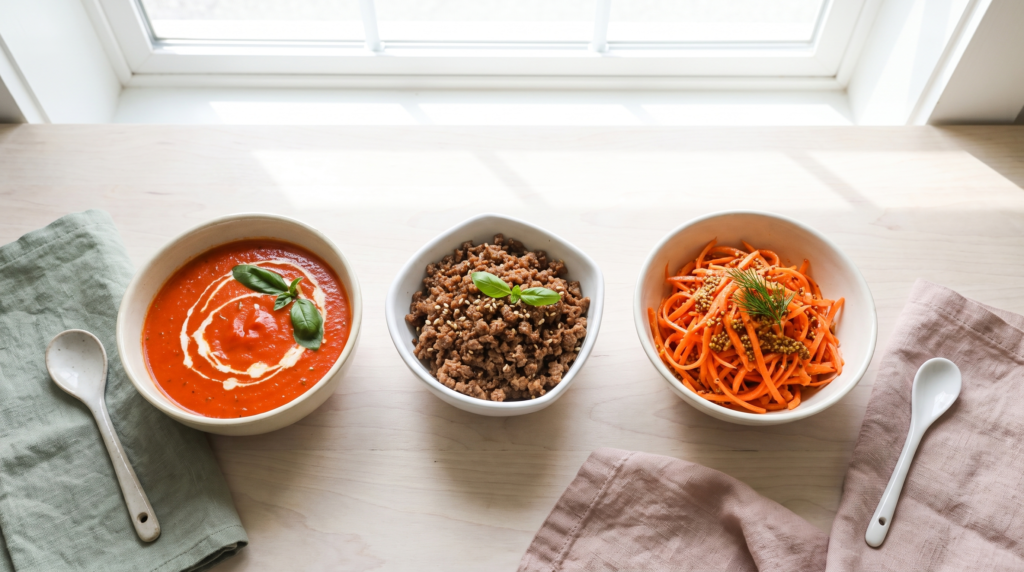
Instead of one finished meal, I prep bases, the kind of thing that becomes three or four different meals depending on what I pair it with. I make a batch of each on the weekend, usually one to two hours total across all three, and they keep me going through most of the week.
Tomato base. I roast a large tray of halved tomatoes with whole garlic cloves and sliced onion at around 400°F until everything is soft and slightly caramelized, then blend it all together with a little olive oil and salt. This makes roughly four to five cups, which keeps well in the fridge for about five days in a sealed container. On its own thinned with a little broth, it’s soup. Tossed with pasta, it’s dinner in ten minutes. I’ve also used it as a base for shakshuka on mornings I want something warm.
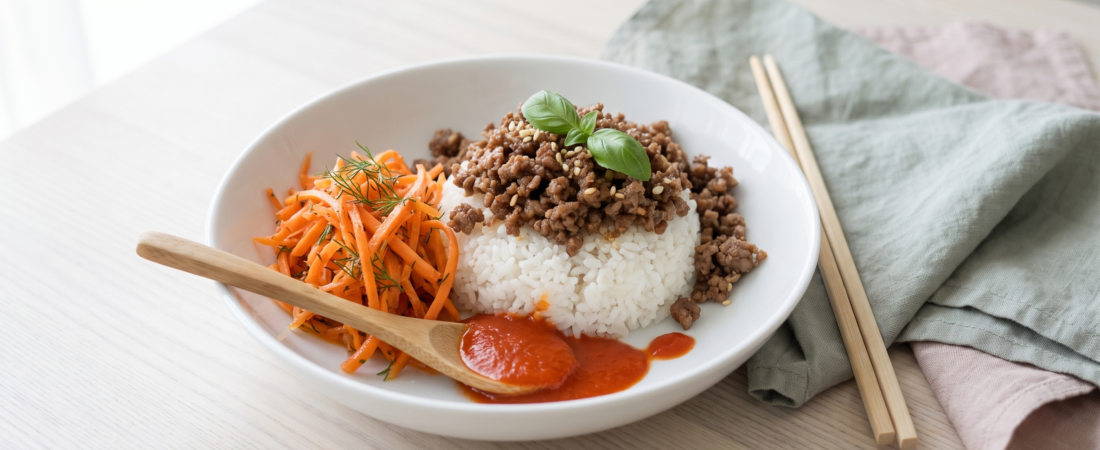
Ground beef soboro. This is a Korean method of simmering ground meat with soy sauce, a little sugar, garlic, and ginger until the liquid reduces down and coats the meat in a deep, slightly sweet glaze. A pound of ground beef makes enough for several meals and keeps for four to five days refrigerated, or longer if I freeze half the batch right away. From there it goes into fried rice one night, rolled into gimbap another, or wrapped into a burrito with rice and vegetables if I’m short on time.
Carrot rapé. I julienne two or three large carrots, either by hand or with a mandoline if I want it fast, then toss them with white balsamic vinegar, a little honey, mustard seed and a splash of olive oil to quick-pickle. It’s ready to eat within thirty minutes but actually tastes better after a day in the fridge, and it holds up well for a full week without going soft or watery the way plain shredded carrot does sitting loose in a bag. It goes straight into a salad, or layered into a sandwich for crunch.
None of these are full meals on their own. That’s the point. They’re building blocks, and I decide what to build depending on the day, which is exactly the flexibility a single finished dish never gave me.
My Experience
What changed for me wasn’t really the cooking time, it was the waste. Before this, at least half of what I meal-prepped in big single-meal batches ended up in the trash by Friday because I’d lost interest in eating it by day three. Since I switched to prepping these three bases instead, I can’t remember the last time I threw food away from boredom rather than from it actually going bad.
Dinner decisions also got easier in a way I didn’t expect. Instead of asking myself what to cook, I ask what mood I’m in, then reach for whichever base fits it. Some weeks the tomato sauce disappears by Tuesday and I make more. Other weeks the soboro carries me through to Saturday. The flexibility is what made this stick where the single-dish method never did, and it’s cut my actual grocery spending too, since I’m not buying separate ingredients for five different planned dinners that may or may not get eaten.
What To Watch For
This works especially well if you’re cooking for just yourself or one other person, since you’re not locked into one flavor for the whole household. If you’re feeding a family with different tastes, you might need two or three bases running at once rather than one, which is more prep upfront but still less waste than a single big batch nobody quite finishes. Keep everything in clear, shallow containers rather than deep ones. You’re far more likely to actually use something you can see at a glance in the fridge.
What’s one dish in your fridge right now that you’re already a little tired of? Try turning it into a base instead of a fixed meal this week, and see what you build with it.