
I used to think that the answer to dark circles and melasma was simple: find a foundation with better coverage.
A full-coverage foundation seemed like the obvious choice. If I could cover everything, surely my makeup would look better.
Except it didn’t quite work that way.
The more foundation I applied, the more noticeable my lines seemed to become. Instead of the smooth finish I wanted, I was seeing a heavier layer of makeup sitting on my skin.
Eventually, I stopped asking, How can I cover more? and started asking, How can I make my skin look fresh and hydrated?
When Full Coverage Started Working Against Me
High-coverage foundation used to be my go-to. I wanted to hide the dark circles and melasma, not draw attention to them.
But applying more product didn’t make my skin look the way I hoped. My facial lines looked more pronounced, and the overall effect felt too heavy for an ordinary day.
That was the point when my priorities shifted. I still wanted a more even skin tone, but I no longer wanted every spot covered. I wanted a little glow, a little moisture, and skin that still looked like skin.
The Products Behind My Foundation-Free Look
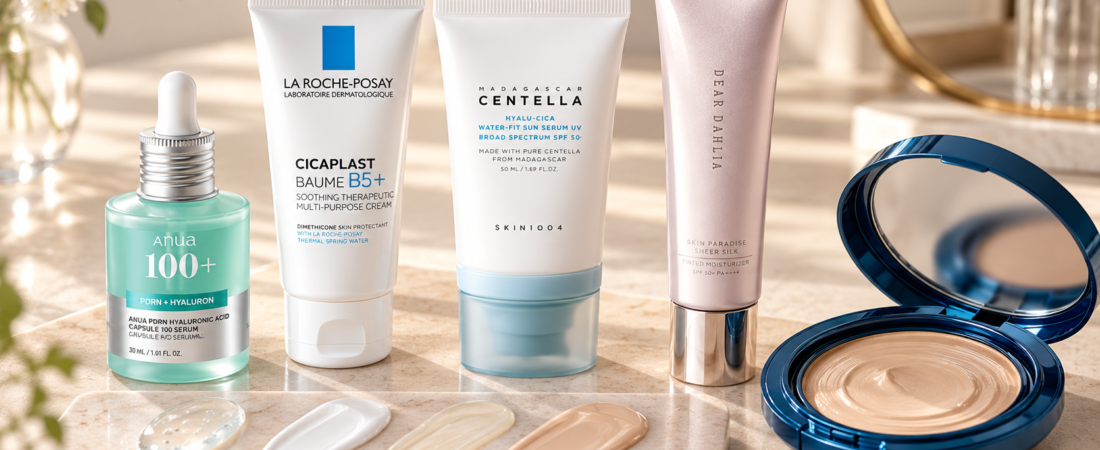
My routine now focuses on lightweight color and a dewy finish rather than traditional foundation. These are the products I reach for:
- Dear Dahlia BB Cream: for a touch of color and a more even-looking complexion.
- La Roche-Posay repairing cream: one of the moisturizing products in my routine.
- Anua PDRN serum: part of the skin-care mix I’ve experimented with.
- A Centella sunscreen without a noticeable white cast: the sunscreen I prefer for its appearance on my skin.
- Concealer: for a small amount of coverage on dark circles and melasma.
These are personal choices, and I don’t assume a PDRN serum treats melasma.
My Cushion Compact Experiment
In search of a finish that suited my skin tone, I began adjusting the proportions of my BB cream, cream, serum, and sunscreen. I put the blend into an empty cushion compact so I could apply it easily.
What I liked was the look: my skin appeared moisturized, naturally dewy, and less heavily made up. That’s the finish I was after, especially for everyday errands and outings.
But there’s an important catch to this experiment, and I wouldn’t recommend copying the sunscreen-mixing part.
Why I Wouldn’t Recommend Mixing Sunscreen Into a DIY Cushion
Sunscreen is tested as a finished formula. Once you blend it with BB cream or skin care, you can’t assume you’re getting the SPF protection printed on the original bottle. Moving a homemade mixture into a compact can also introduce hygiene and product-stability concerns.
For reliable sun protection, the safer approach is to apply a broad-spectrum SPF 30 or higher sunscreen separately, as directed, and let it settle before applying makeup. Keep products in their original packaging unless the manufacturer says otherwise. The American Academy of Dermatology also recommends sunscreen as an essential part of managing melasma.
I’m sharing how I arrived at my preferred makeup finish, not offering the homemade cushion mixture as a tested sun-protection method.
How to Recreate a Light, Dewy Finish More Safely
1. Start with Hydration
A light layer of skin care can help makeup feel less heavy. I prefer a hydrated look, but the exact amount of cream or serum depends on how my skin feels that day.
2. Keep Sunscreen Separate
Use sunscreen in the amount recommended on its label before makeup. If you have melasma, a tinted broad-spectrum sunscreen with iron oxides may also help protect against visible light that can worsen dark spots.
3. Use BB Cream for a Sheer Finish
Instead of reaching for full-coverage foundation, try a thin layer of BB cream after sunscreen has set. Add only what you need to even out your complexion.
4. Conceal Just the Spots That Bother You
I use concealer where I want a little extra coverage, especially under my eyes and over patches of melasma. I don’t feel the need to cover my entire face anymore.
Less Coverage, More Glow
My change in makeup was about choosing less coverage.
I still notice my dark circles and melasma. I simply prefer a softer approach now: a more even skin tone, carefully placed concealer, and a natural, dewy finish.
There’s something satisfying about finding a routine that feels right for the skin you have today, rather than trying to recreate the makeup you wore years ago.
Has your makeup routine changed after 45 or 50? I’d love to know whether you’ve also started choosing glow over full coverage.
Sources and Skin-Safety Notes
- American Academy of Dermatology: Skin-care application order
- American Academy of Dermatology: Melasma self-care
- U.S. FDA: Microbiological safety and cosmetics
Note: This article is based on my personal makeup experience and offers general skin-care information. It is not a medical recommendation or a substitute for a dermatologist’s advice.