
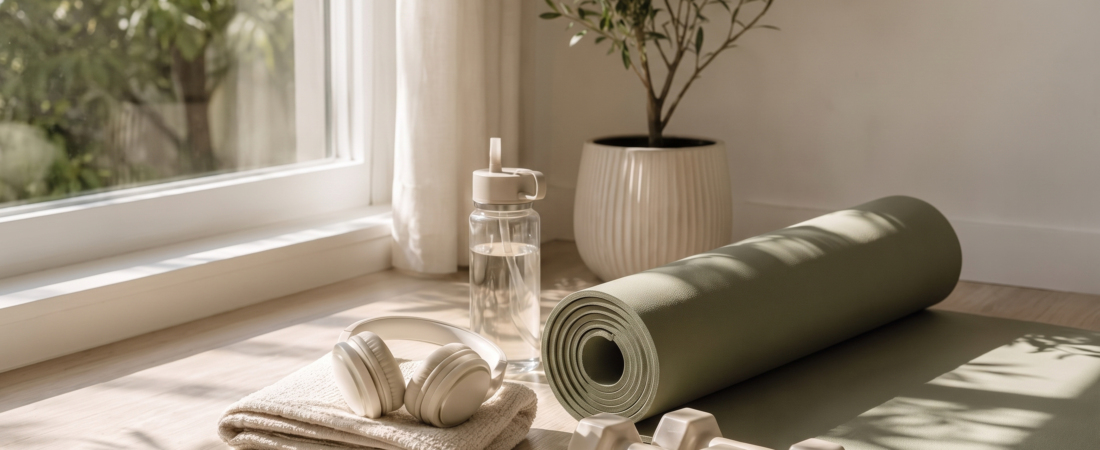
I picked up a five-pound dumbbell one morning almost as an afterthought, mostly because it was sitting on my dresser and I felt guilty walking past it again. I didn’t expect much. I’d expected a lot of things from a lot of routines by that point, and none of them had stuck.
When My Body Stopped Cooperating
Sometime after 40, exercise stopped being something I could just decide to do and follow through on. It wasn’t injury, exactly, and it wasn’t pain either. It was more that my body seemed to need a different kind of convincing than it used to, and I never quite figured out what that convincing looked like. I’d start something, feel fine for a few weeks, and then quietly stop, the way you stop returning a friend’s texts without ever deciding to.
The honest truth is I’ve never been someone who loves exercise for its own sake. I don’t get a rush from it. I don’t look forward to it the way some people genuinely seem to. So when my usual half-hearted approach stopped producing even the modest results it used to, I didn’t have much motivation reserve to draw on.
What The Experts Say, And What I Actually Tried
The research is pretty consistent on this: after 40, muscle mass declines faster than it did in your 20s and 30s, and hormonal shifts during perimenopause make that decline even more noticeable. Strength training two or three times a week, focused on compound movements, is what most trainers and doctors point to as the thing that actually counters this. None of that is a surprise if you’ve read anything on the topic.
What surprised me was how many different things I tried before landing on anything that stuck. I did Pilates classes for a while, and I liked them well enough, but I never felt pulled toward going back once life got busy. I tried yoga too, same story. I even got into golf for a stretch, which I enjoyed as a social outing more than as exercise, if I’m being honest. None of it failed because it didn’t work. It failed because I just don’t have the kind of drive that keeps someone showing up to a class or a course consistently, and eventually each one quietly dropped off my calendar.
My Experience
What actually stuck was almost embarrassingly simple. A pair of light dumbbells, done at home, morning and evening, a few basic arm exercises I didn’t have to think hard about or schedule around anyone else. No class times, no drive anywhere, no gear beyond what was already sitting in my bedroom. I added resistance bands in not long after, mostly for variety, and kept alternating between the two.
Six months in, my arms genuinely looked different. Slimmer, more defined along the line from shoulder to elbow, in a way I hadn’t expected from something this low-effort. I wasn’t chasing a specific result when I started. I just kept doing it because it was easy enough not to skip.
The other thing I added almost by accident was using a wooden neck pillow, a mokchim, to massage the back of my head and my shoulder blades two or three times a week. I’d roll it against the base of my skull and across my upper back for a few minutes at a time. It sounds minor, but the circulation boost noticeably eased the eye strain and dull headaches I’d been getting almost daily. I don’t know the exact mechanism behind it. I just know I stopped reaching for headache medication as often once I started doing it regularly.
What I’d Tell Someone Starting Out
If you’ve tried the class, the studio membership, the ambitious program, and none of it stuck, the problem probably isn’t your willpower. It might just be that the format was wrong for you. For me, low-friction beat high-intensity every time. Something I could do in my bedroom in ten minutes, twice a day, outlasted every class I ever paid for.
Start light. A pair of two or five-pound dumbbells is plenty to begin with, and resistance bands are inexpensive and easy to store. Give it real time before judging whether it’s working; I didn’t see visible change for months, not weeks.
A quick note: I’m not a doctor or a certified trainer, and nothing here replaces a conversation with one. If you have joint issues, chronic pain, or any condition that makes new exercise risky, it’s worth checking with a doctor before starting anything new.
How did you figure out what actually works for your body at this stage? I’d love to know what finally stuck for you.